A supporting structure
The cryptoporticus is more than just a corridor: it creates a stable level and manages the change in elevation beneath the villa.

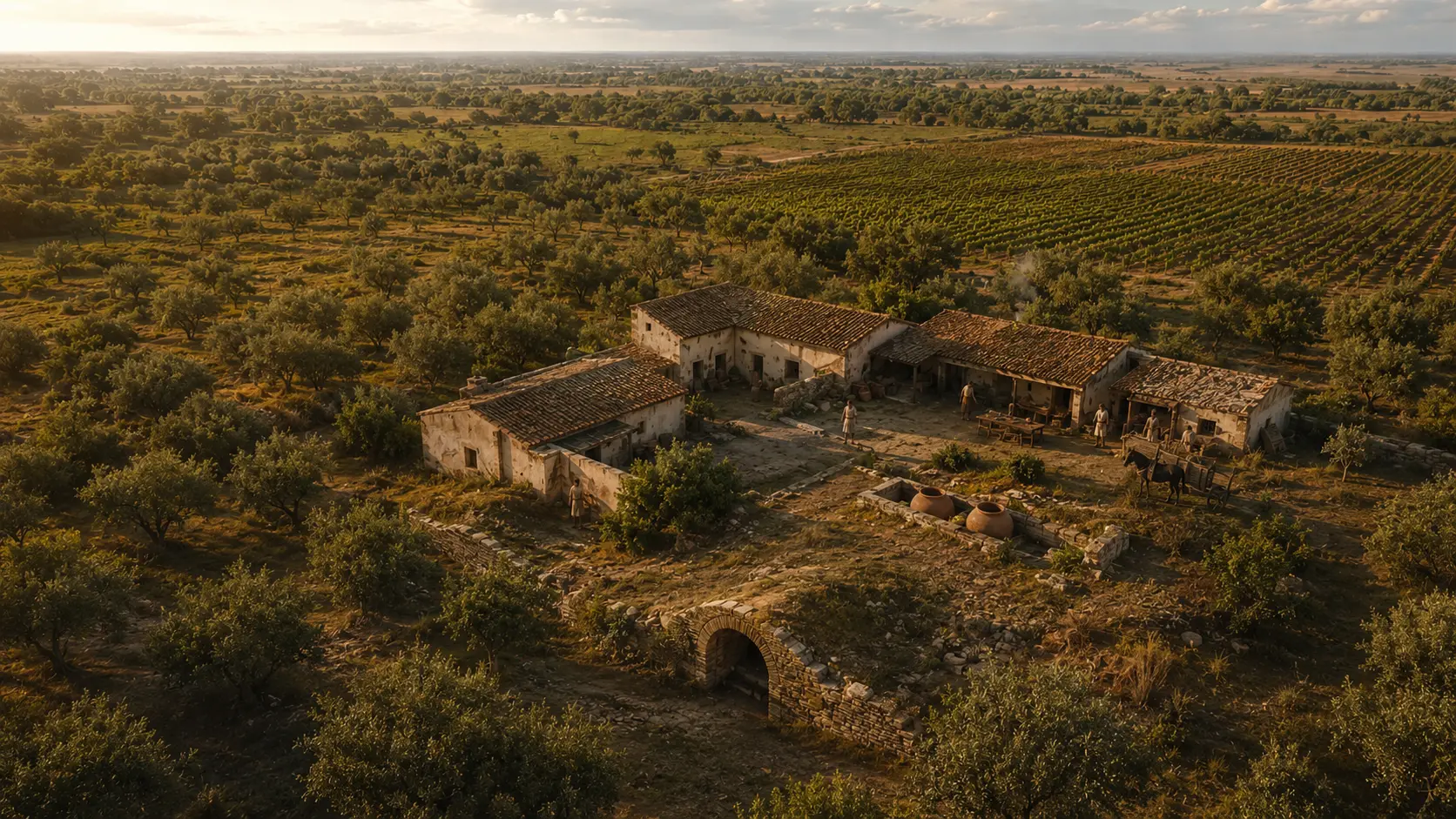
Urban Ladispoli · Roman villa and cryptoporticus
THE SITE AT A GLANCE
Between Via Nervi and Via Rapallo, near the Don Giovanni Bosco school, the remains of a *villa rustica* (country villa) are preserved; the site was in use from the 1st to at least the 4th century AD. The most recognizable feature is a barrel-vaulted substructure cryptoporticus—a space built to support the rooms above and adapt the villa to the lay of the land.
Research has identified an access staircase and sections of the *pars rustica*—the areas dedicated to agricultural labor and management. The most recent archaeological synthesis points to a probable *doliarium* (storage area for large jars) and an oil press. However, it does not identify a specific *torcularium* (wine-pressing area), nor does it allow for a definitive reconstruction of the complex's overall layout.
Two fragments of *cipollino* marble columns, kept in the nearby garden of the Augustinian Sisters on Via Milazzo, may have come from the villa. A connection is possible but unproven. Recent work has also uncovered further structures and materials from the Imperial age, although a full publication of the excavation is not yet available.
TWO SCENARIOS AND FIVE TYPOLOGICAL COMPARISONS
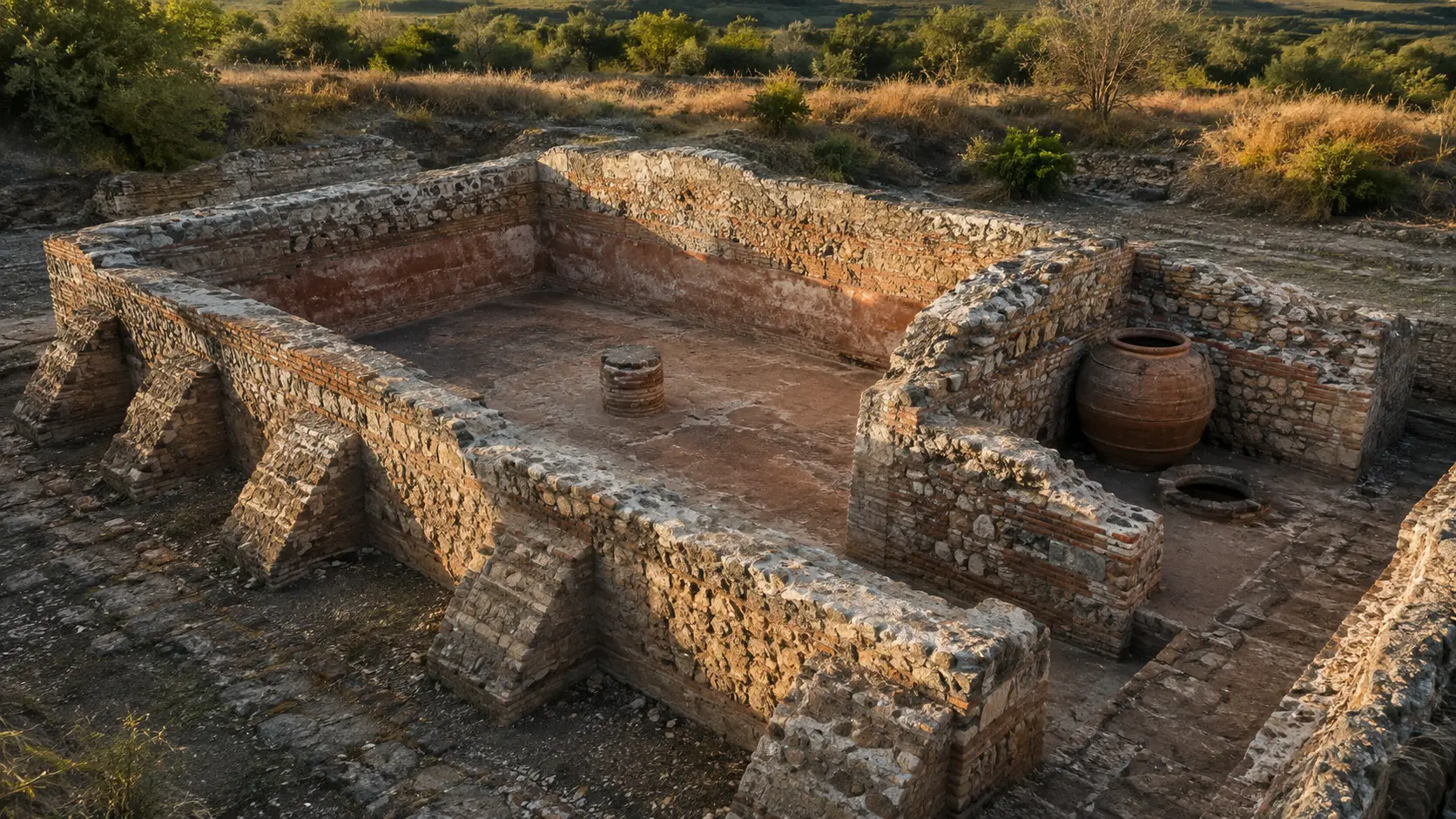
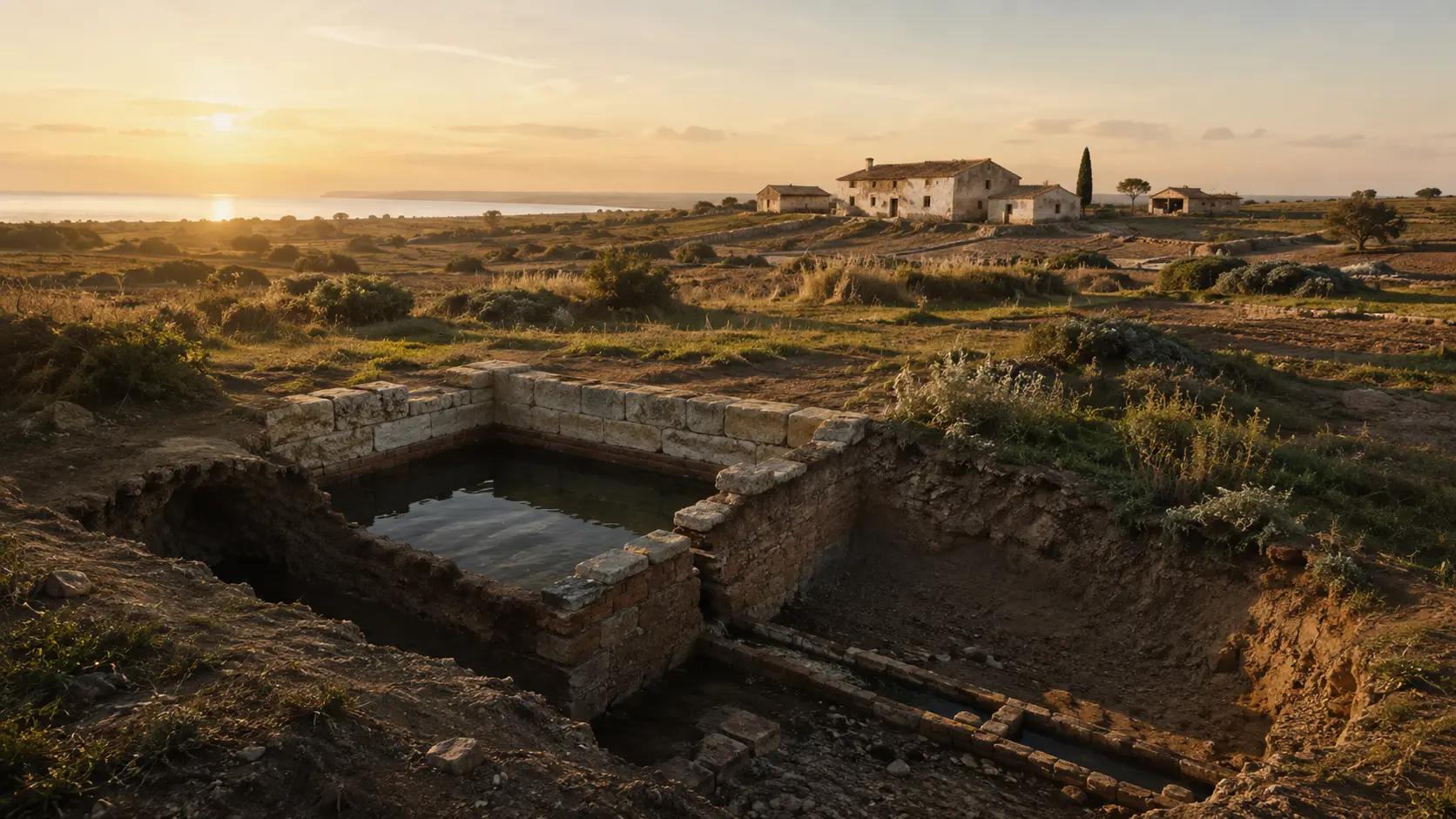
No open-license photographs of the "Grottaccia" are available. To avoid using copyrighted images, this page juxtaposes identified views with artifacts or settings from other sites—always labeled as points of comparison rather than as actual records of the Ladispoli villa.
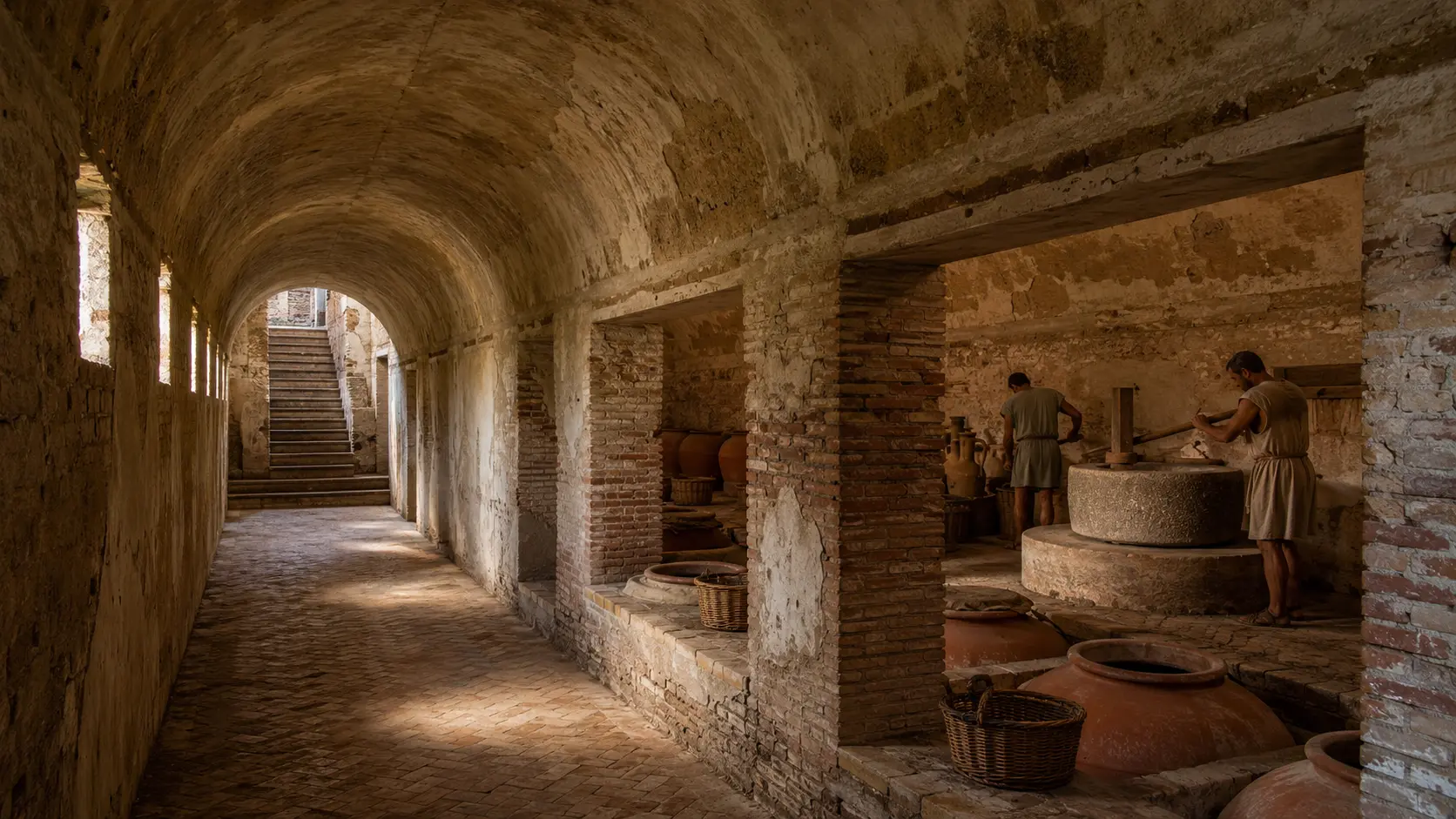
The scene brings together a cryptoporticus, a staircase, and areas for storage and processing, making the functions mentioned in historical sources clearly understandable. The layout, masonry, flooring, figures, and equipment do not attempt to replicate an excavated space.
LADISPOLI.IT editorial visualization · non-metrical reconstruction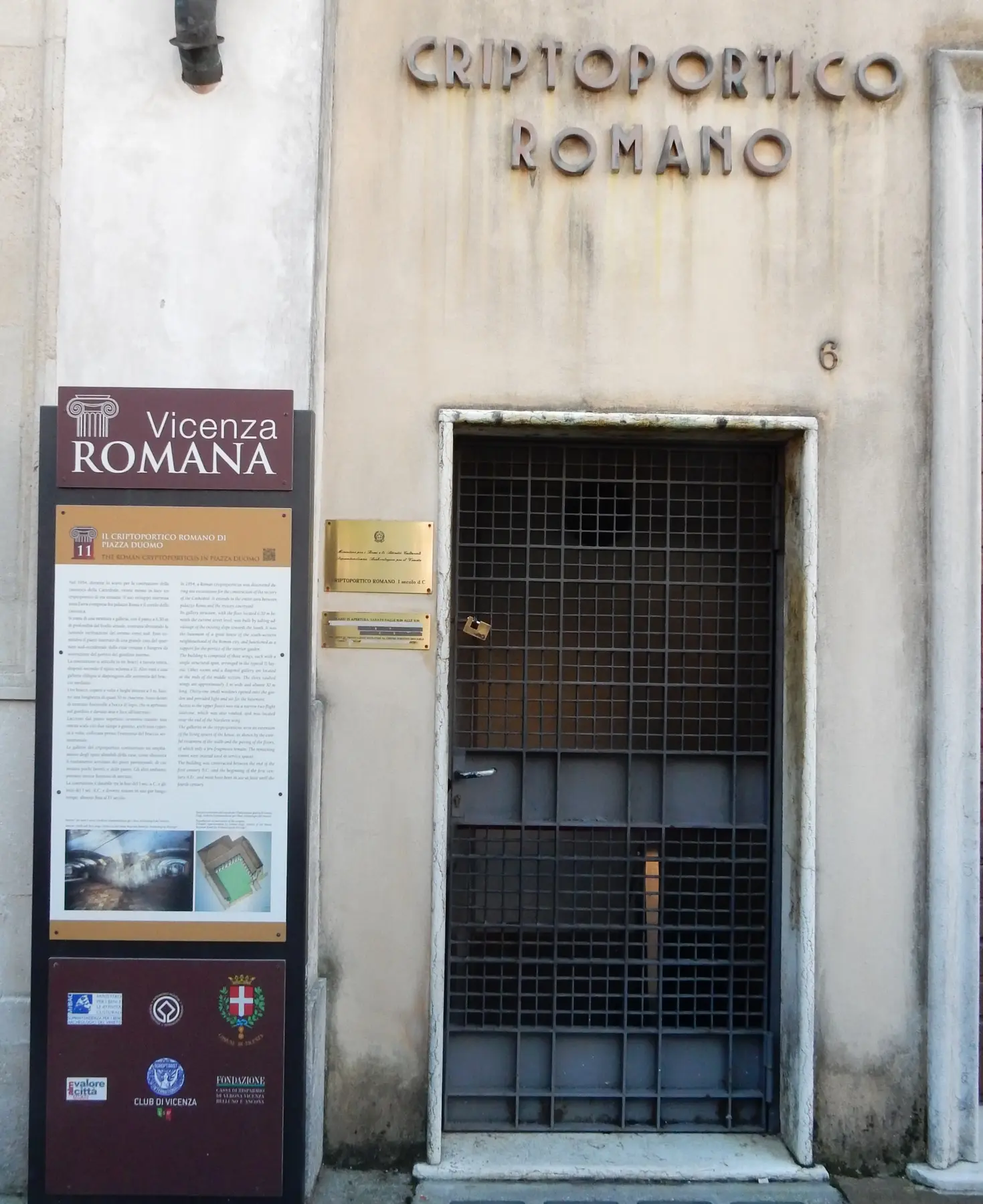
The entrance to the Vicenza cryptoporticus helps one grasp the concept of a vaulted, partially underground space. Its form, scale, and state of preservation do not match those of the Grottaccia.
Mpiva / Wikimedia Commons · CC0 · resizing and WebP conversion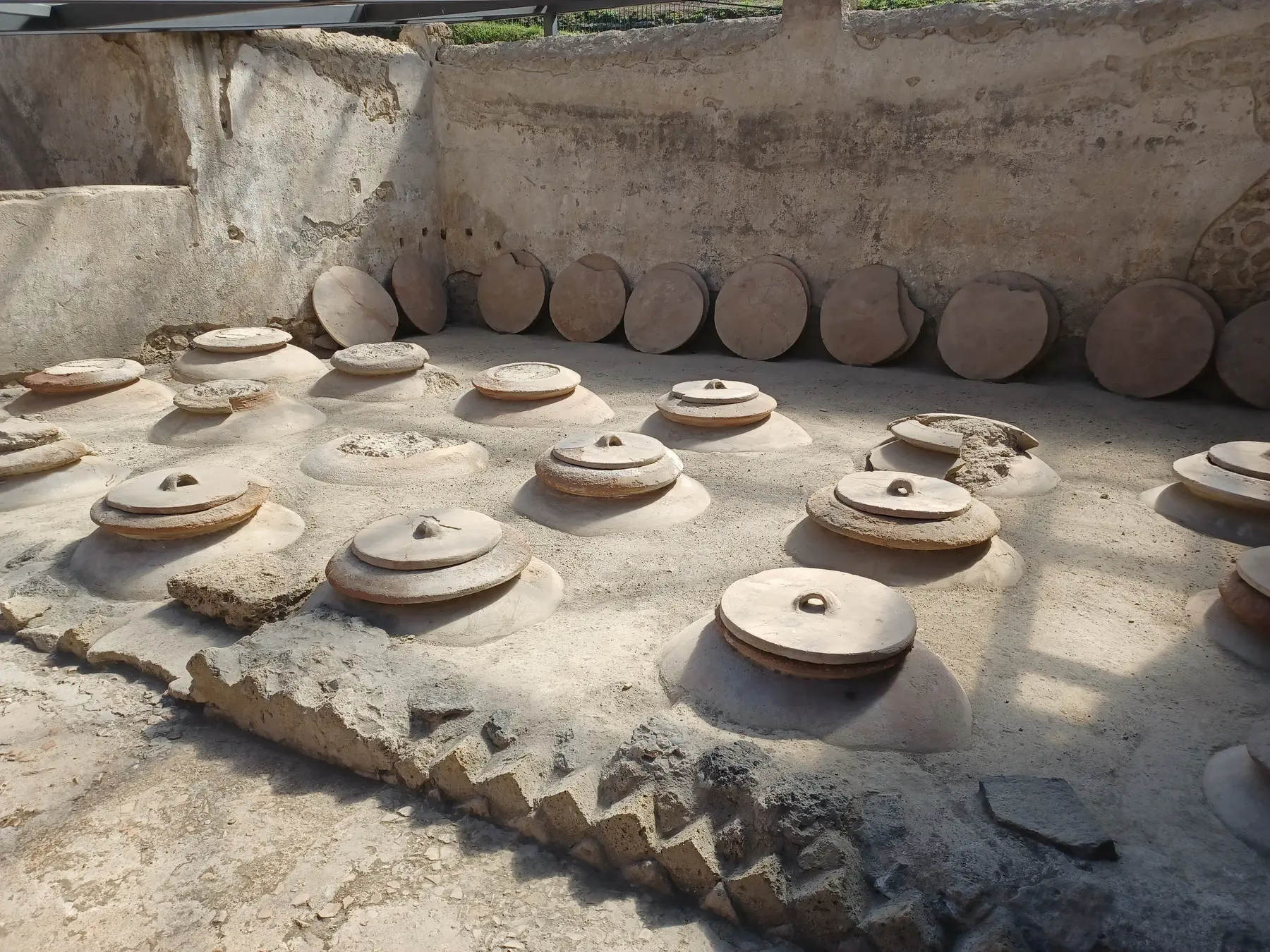
The *dolia* found *in situ* at Villa Regina in Boscoreale illustrate how large vessels could be sunk into the ground and arranged; however, they do not reconstruct the layout of the probable *doliarium* (storage room) at the Ladispoli site.
Carla Brain / Wikimedia Commons · CC BY-SA 4.0 · resized and converted to WebP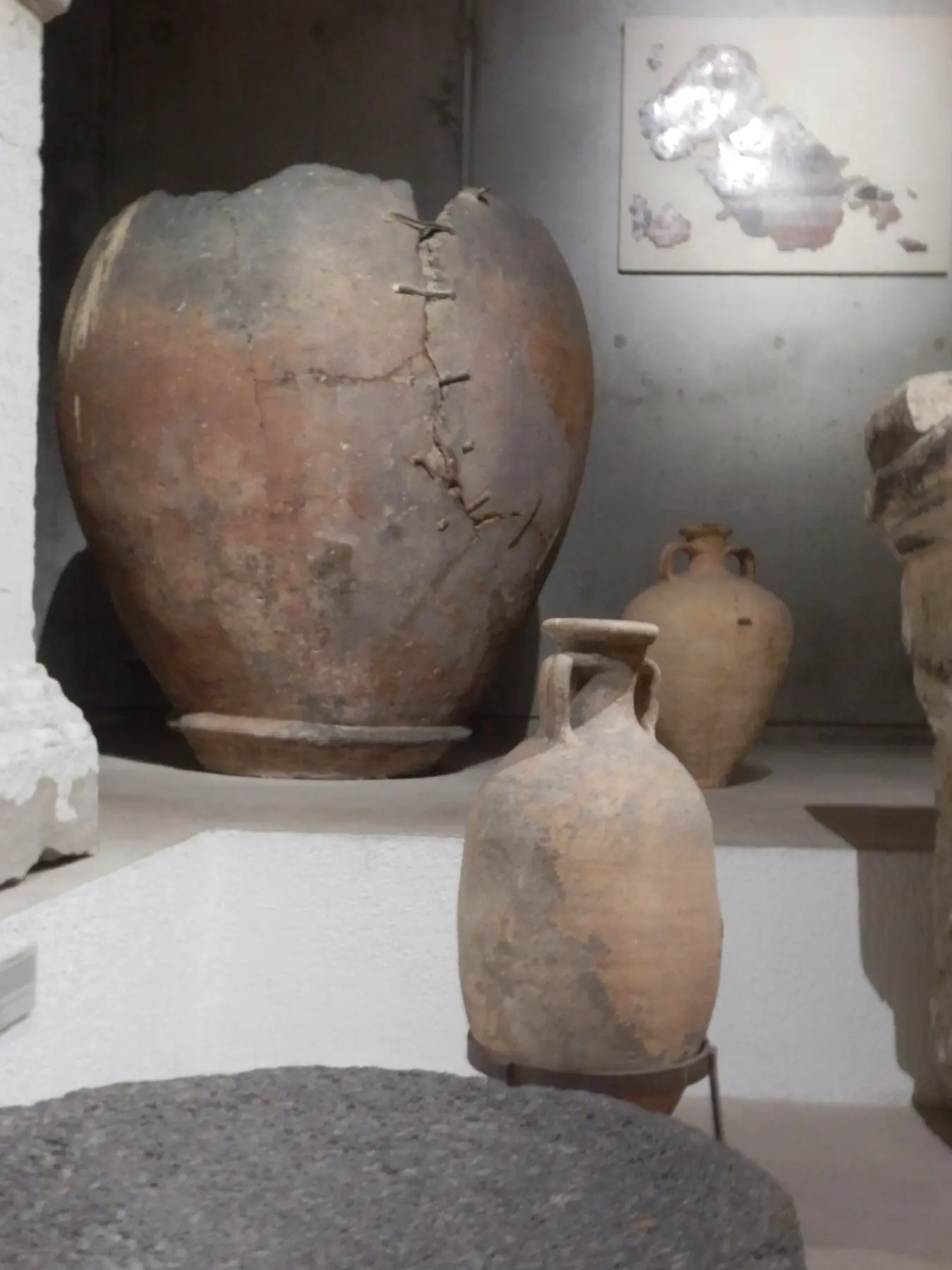
The *dolium* on display in Lyon does not come from Ladispoli. It serves merely to illustrate the volume and shape of the category of vessels suggested by the evidence found at the villa.
Ursus / Wikimedia Commons · CC0 · resized and converted to WebP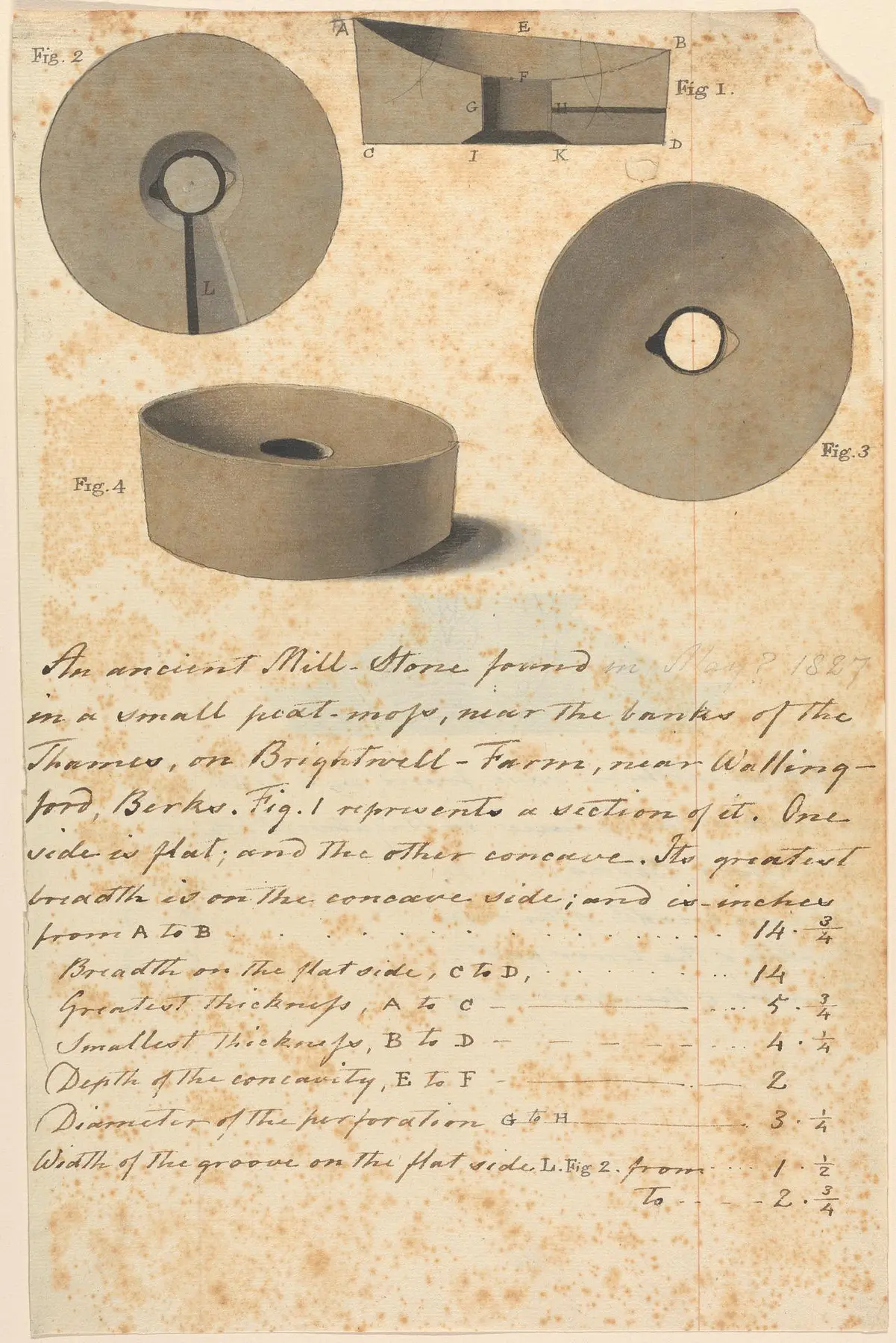
Edward Francis Burney’s drawing depicts an ancient millstone and introduces the theme of rural production. It does not document the Grottaccia oil mill or its specific equipment.
Edward Francis Burney / Yale Center for British Art · CC0 · WebP conversion
The sample displays the lithology cited for two nearby column fragments. It does not originate from the villa, nor does it prove that those fragments belonged to the complex.
Roll-Stone / Wikimedia Commons · public domain · WebP conversionSix elements, six degrees of certainty
The record distinguishes between observed structures, probable functions, and materials that may be associated with the site. This distinction is essential because the complex is only partially known.
The long, barrel-vaulted space supported the upper levels and forms the most recognizable and restored monumental core.
Visible only during organized opening eventsThe vertical route identified by research connected the lower section with the villa’s upper rooms.
Archaeological feature · no independent accessThis sector reflects activities related to the storage and processing of goods, although the specific function of each room has not yet been determined.
Partial archaeological readingEvidence identified in the archaeological summary suggests an area containing large storage vessels; their layout and capacity remain unpublished.
Probable interpretationThe presence of an oil press is noted in the most up-to-date local sources; however, this is not interpreted here as a definitive layout of a *torcularium* (press room).
Function attested (summary)The fragments preserved in the garden of the Augustinian Sisters may have originated from the villa, but this attribution remains hypothetical.
Religious property · no implied accessESSENTIAL STEPS
Confirmed dates, archaeological phases, and traditions are presented for what they truly represent.
Evidence indicates that the site began to be frequented during the early Imperial period.
cronologia archeologicaThe cryptoporticus and rustic areas underwent multiple phases; a comprehensive publication will be required to clarify their sequence and functions.
intervallo prudenteLocal records document the structure and the preparation of a restoration project for the cryptoporticus.
archivio GATCThe site is linked to restoration projects and opportunities for visits, as noted in the local archaeological association's archives.
cronaca degli interventiMowing, fencing, and repairs following vandalism improve accessibility. These are maintenance tasks, not new excavation campaigns.
interventi documentatiLocal associations repair grates, walkways, fences, and lighting, and install interpretive signage, while further excavations remain a goal.
valorizzazione civicaThe guide to Ladispoli’s heritage organizes the essential data and records recent interventions involving additional Imperial-era materials, without publishing a full report.
sintesi archeologicaSpecial openings, exhibitions, and summer events confirm that access is linked to scheduled occasions rather than daily archaeological site hours.
programma pubblico recenteWHAT TO OBSERVE
The cryptoporticus is more than just a corridor: it creates a stable level and manages the change in elevation beneath the villa.
The vertical connection shows that the lower section was part of the complex's internal circulation.
Large sunken containers would have allowed for the storage of foodstuffs; at Grottaccia, this function is suggested but not reconstructed in detail.
The villa was not merely a residence; the oil press links it to the agricultural economy of the Roman territory.
Nearby fragments suggest high-quality architectural features, but without a documented excavation context, they cannot provide a definitive description of the villa.
A school, roads, and houses currently surround an ancient core that could become a cultural hub without being transformed into a park that is always open.
BEFORE GOING
The reference point for events is Via Rapallo 14, in the area between Via Rapallo and Via Nervi. The cryptoporticus and archaeological site open for special events, exhibitions, heritage awareness days, and special tours.
Before leaving, check the schedule, time, meeting point, and booking procedures via the Municipality’s or organizers’ channels. No permanent accessibility information sheet is published; those with mobility needs should request confirmation. Outside of opening hours, do not cross fences or enter the school grounds or neighboring properties.It is the location used for recent events, not a guarantee of daily public access.
Special events and tours may allow access to the cryptoporticus; check the updated schedule for your chosen day.
Flooring, walkways, staircases, and the event layout are subject to change; please check directly with the organizers.
Use only the designated access points; do not look for alternative entryways or touch the masonry or artifacts.
CONSULTABLE SOURCES
This first edition organizes the most solid information. Individual pages may be expanded with documents, surveys, and archival photographs.
Primary source for the cryptoporticus, staircase, probable *doliarium*, oil press, chronology, and *cipollino* marble fragments.
Open the source TOPOGRAPHICAL OVERVIEWReference study for the archaeological contextualization of the coastal territory and rural complexes.
Open the source PROJECT ARCHIVEDocuments the identification of the staircase and the preparation of the restoration project for the cryptoporticus.
Open the source MAINTENANCEAccount of mowing, cleaning, fencing, and protective structures—distinct here from an actual excavation campaign.
Open the source ENHANCEMENTDocuments the cleanup following acts of vandalism and the involvement of students, associations, and the Municipality.
Open the source OPEN CARTOGRAPHYReference point and geometry for public location; the digital perimeter is not treated as an extension of the ancient villa.
Open the source 2026 OPENINGSOne of the recent initiatives documenting the use of the cryptoporticus for scheduled cultural openings.
Open the source 2026 ProgramConfirms the site's active use through a schedule of music, theater, meetings, and cultural initiatives.
Open the source UPDATESCheck-in point for communications, events, and access updates prior to the visit.
Open the source DISCOVER THE SECTOROpen the complete catalog of monuments, archaeological sites, and historical landscapes.
Open the sectorCONTINUE THE ROUTE