A decisive separation.
The vessel departs with the goods; from that moment on, the painter and the paintings follow separate documented paths.

Palo Laziale · July 1610
THE SITE AT A GLANCE
In July 1610, Michelangelo Merisi—known as Caravaggio—left the Naples area aboard a small *felucca*, carrying only a few possessions and some paintings. He was attempting to return to Rome while negotiations were underway to secure peace with the Tomassoni family and a pardon for the conviction that had forced him into exile.
The key contemporary narrative source is a letter sent on July 29 by the Apostolic Nuncio in Naples, Deodato Gentile, to Cardinal Scipione Borghese. Gentile places the painter’s arrival and detention at Palo; he recounts that the *felucca* departed with his belongings and that Merisi, once released, reached Porto Ercole, where he fell ill and died. However, the letter is not an official report drawn up on the spot, and it does not clarify the reason, duration, or actual circumstances of the detention.
A recent re-examination suggests that his detention may have occurred at Porto Ercole, while still acknowledging Palo as a stop on the journey. This account presents the debate without delivering a definitive verdict: sources close to the events place his death at Porto Ercole—traditionally on July 18, 1610—though the precise route taken and the cause of death remain open questions.
ONE EXPLICIT SCENE, TWO DOCUMENTS, THREE REAL PHOTOGRAPHS.
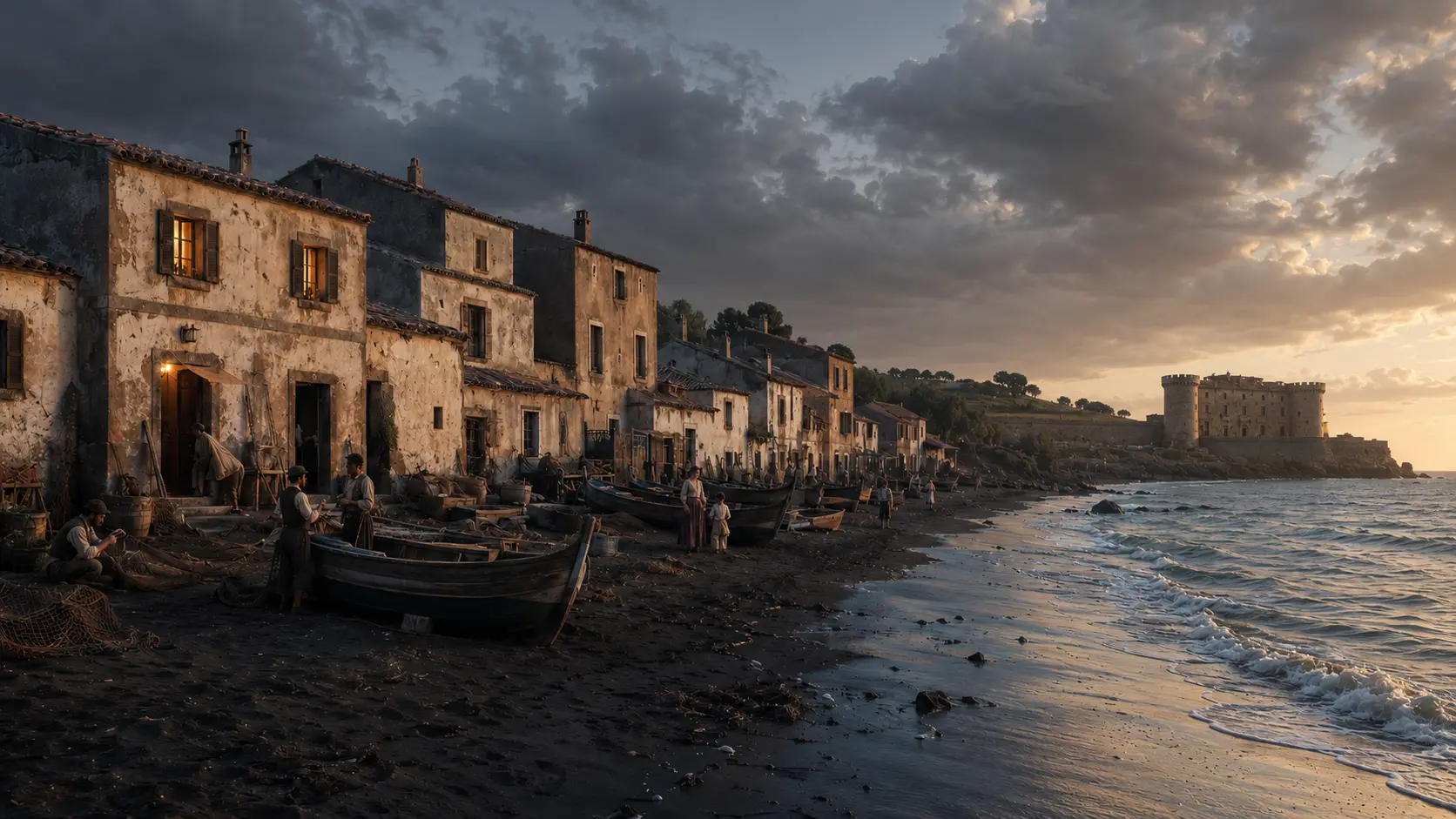
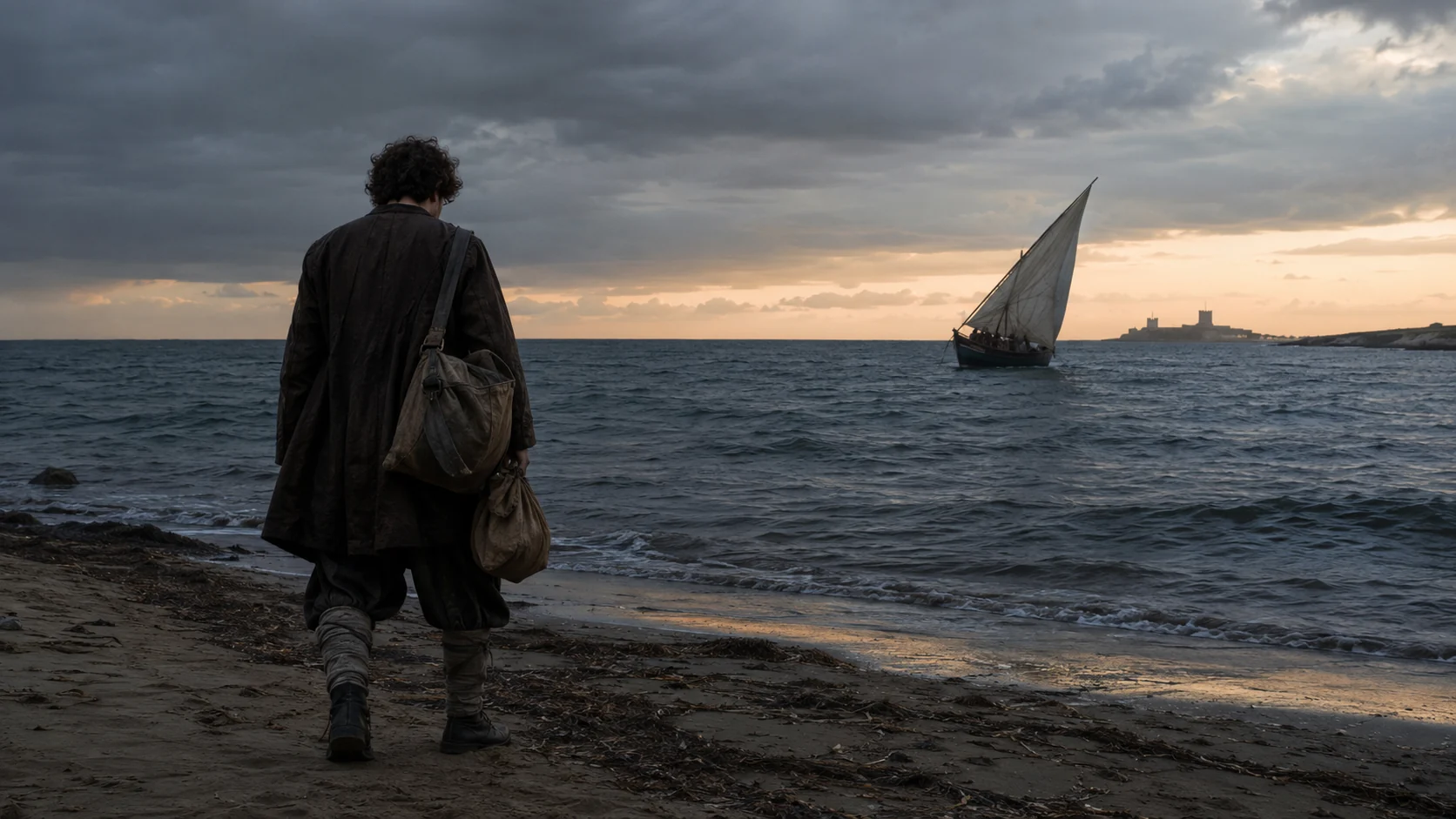
The generated scene introduces the narrative; the engraving and historical map document a landscape dating well after 1610, while contemporary photographs show the sites as they appear today. No image is presented as evidence of the actual landing.
The man, clothing, light, *felucca* boat, coastline, and fortification are evocative elements. The scene does not attempt to reconstruct the exact landing point, the specific stopover, or Caravaggio’s actual appearance in July 1610.
LADISPOLI.IT editorial reconstruction · AI-generated · not a historical record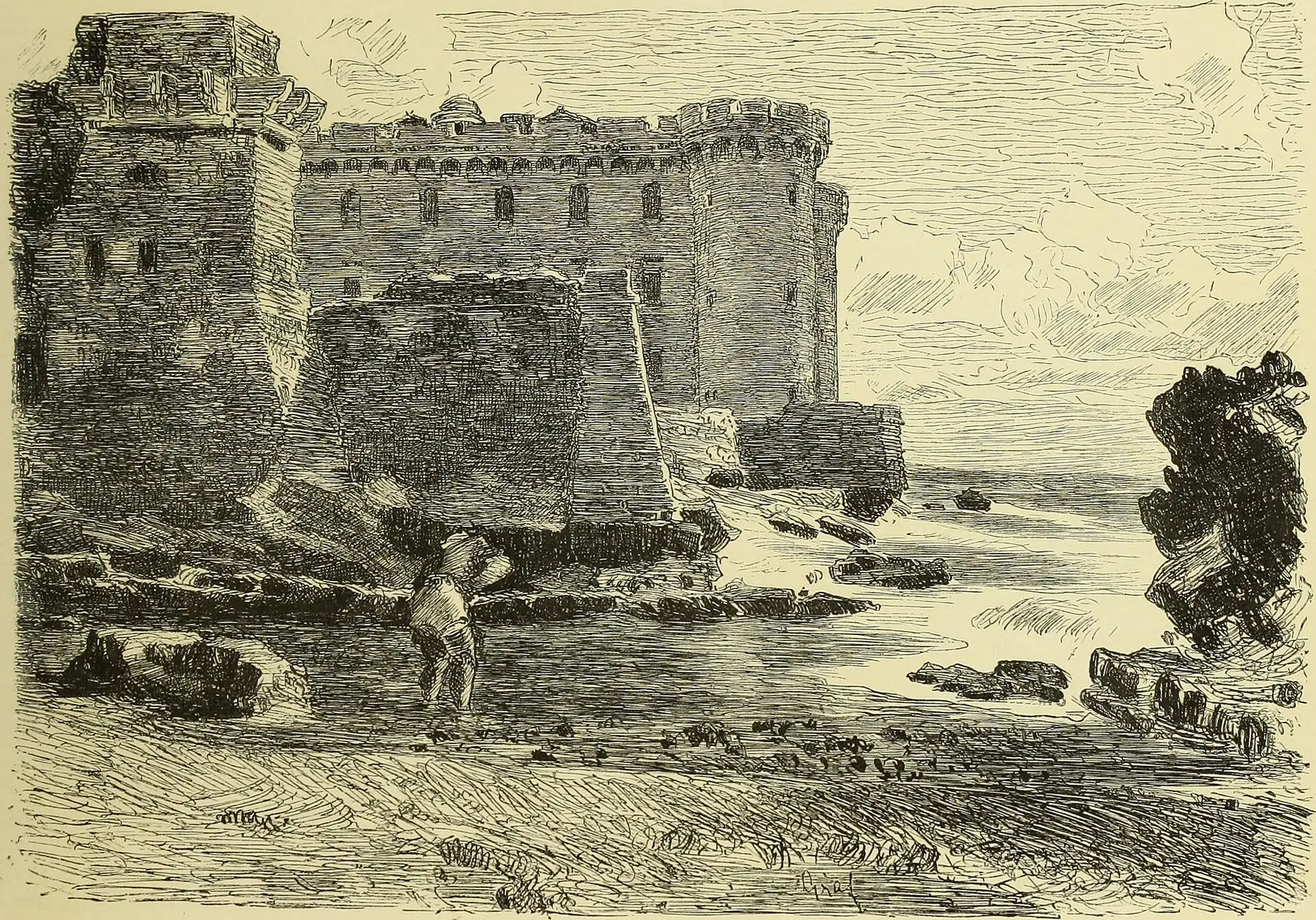
The view documents the coastal landscape more than two and a half centuries after Caravaggio. It should not be used to reconstruct the castle, the shoreline, or the landing place as they existed in the early 17th century.
Internet Archive Book Images / Wikimedia Commons · Italy from the Alps to Mount Etna, 1877 · no known restrictions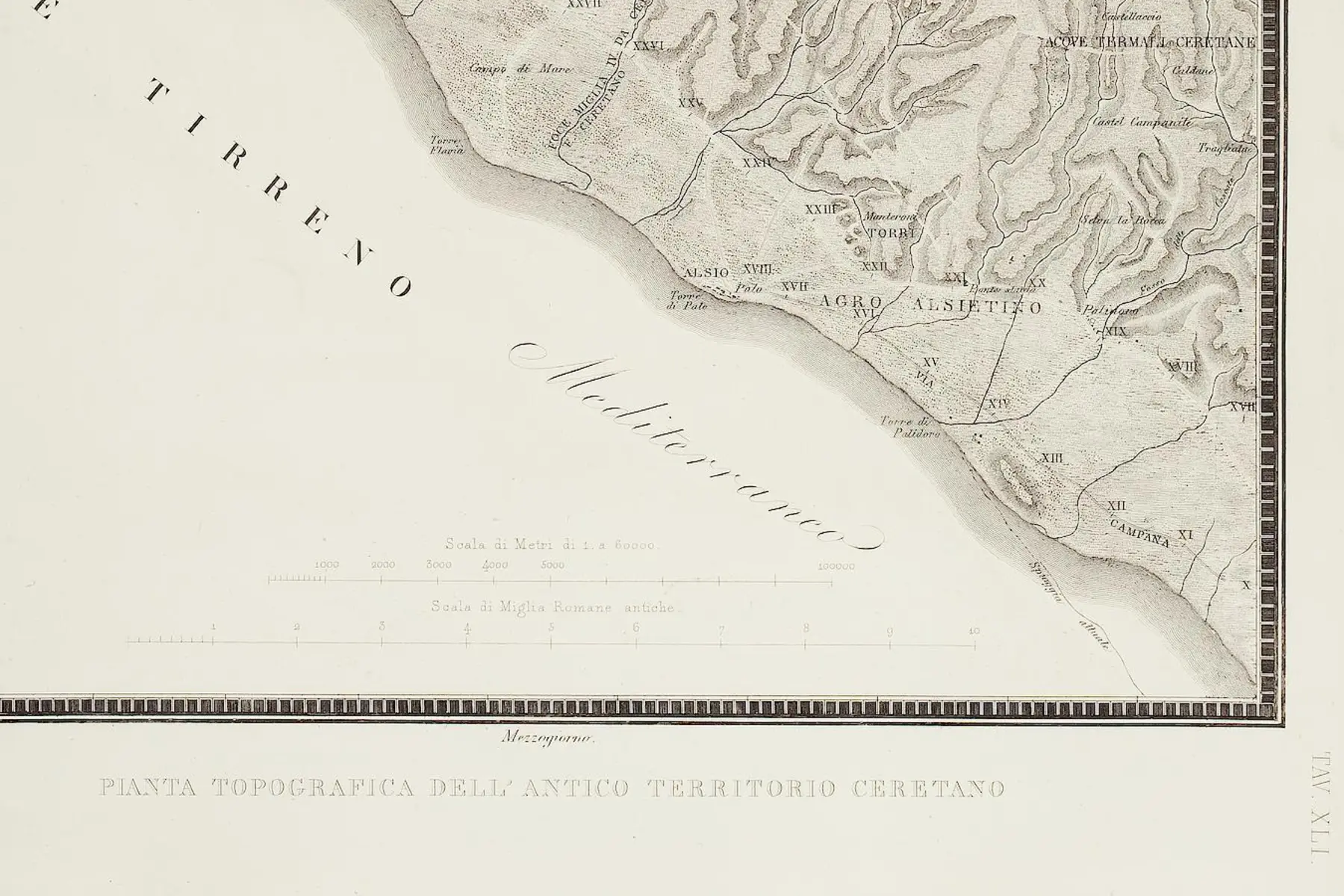
Canina’s plate illustrates the relationship between Palo, the coast, and ancient road networks within a 19th-century context. It does not describe the *felucca*’s route or the exact geography of 1610.
Luigi Canina, 1851 · Heidelberg University Library · Public Domain Mark · cropped and converted to WebP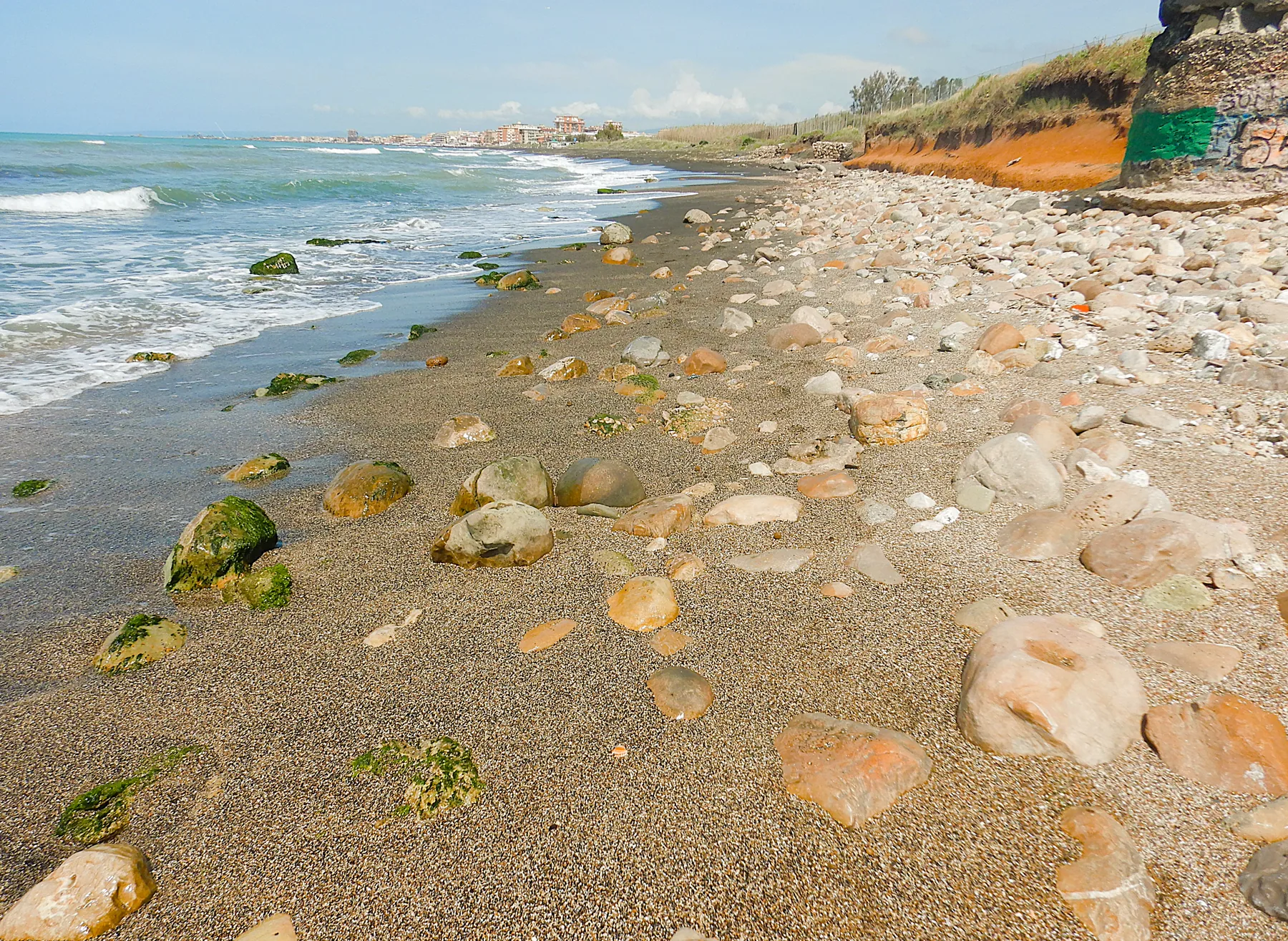
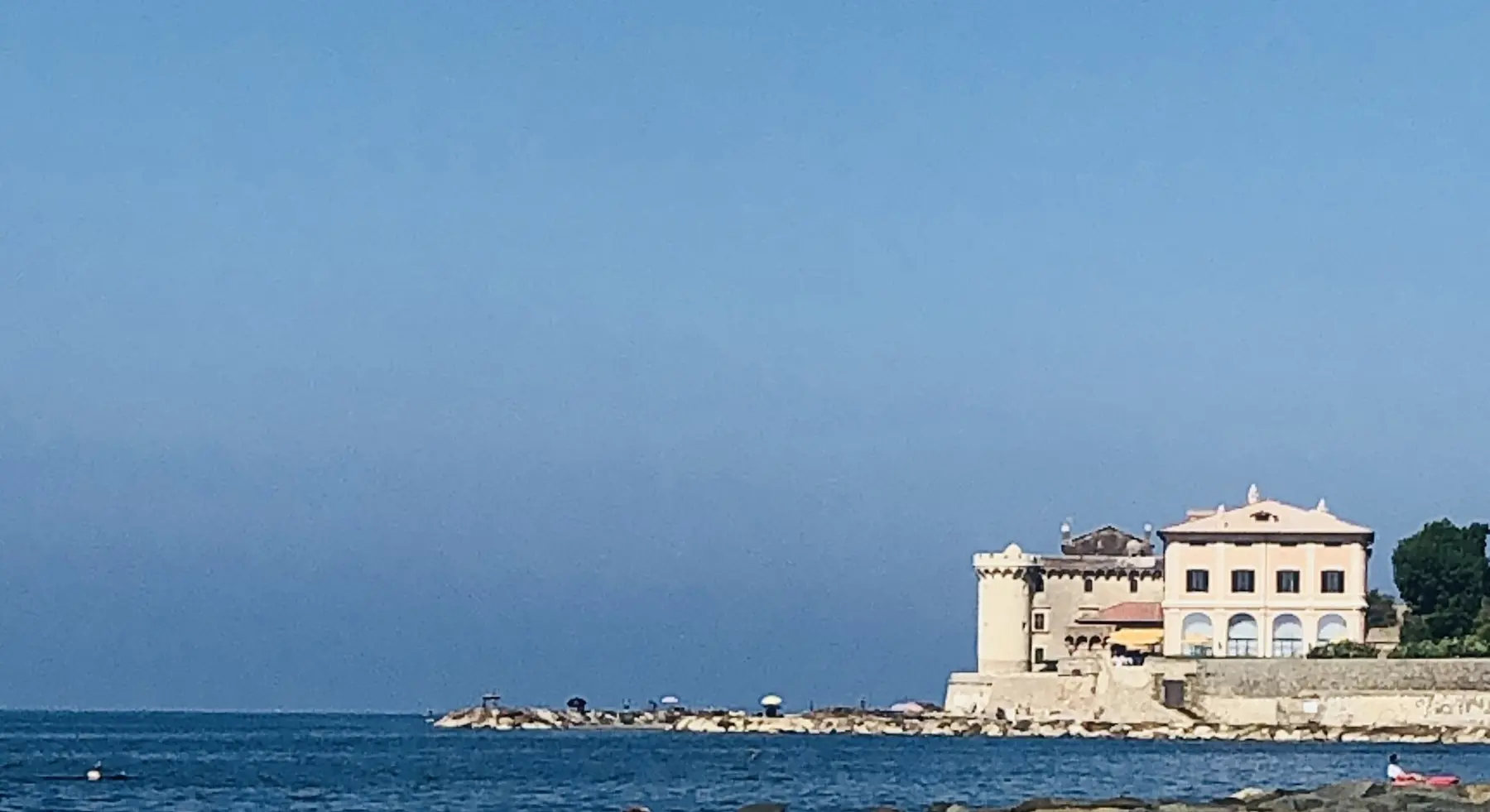
The photograph shows the contemporary landscape of Palo. Erosion, buildings, and the shoreline have changed; it does not pinpoint the exact landing site used in 1610.
Albarubescens / Wikimedia Commons · CC BY-SA 4.0 · resizing and WebP conversion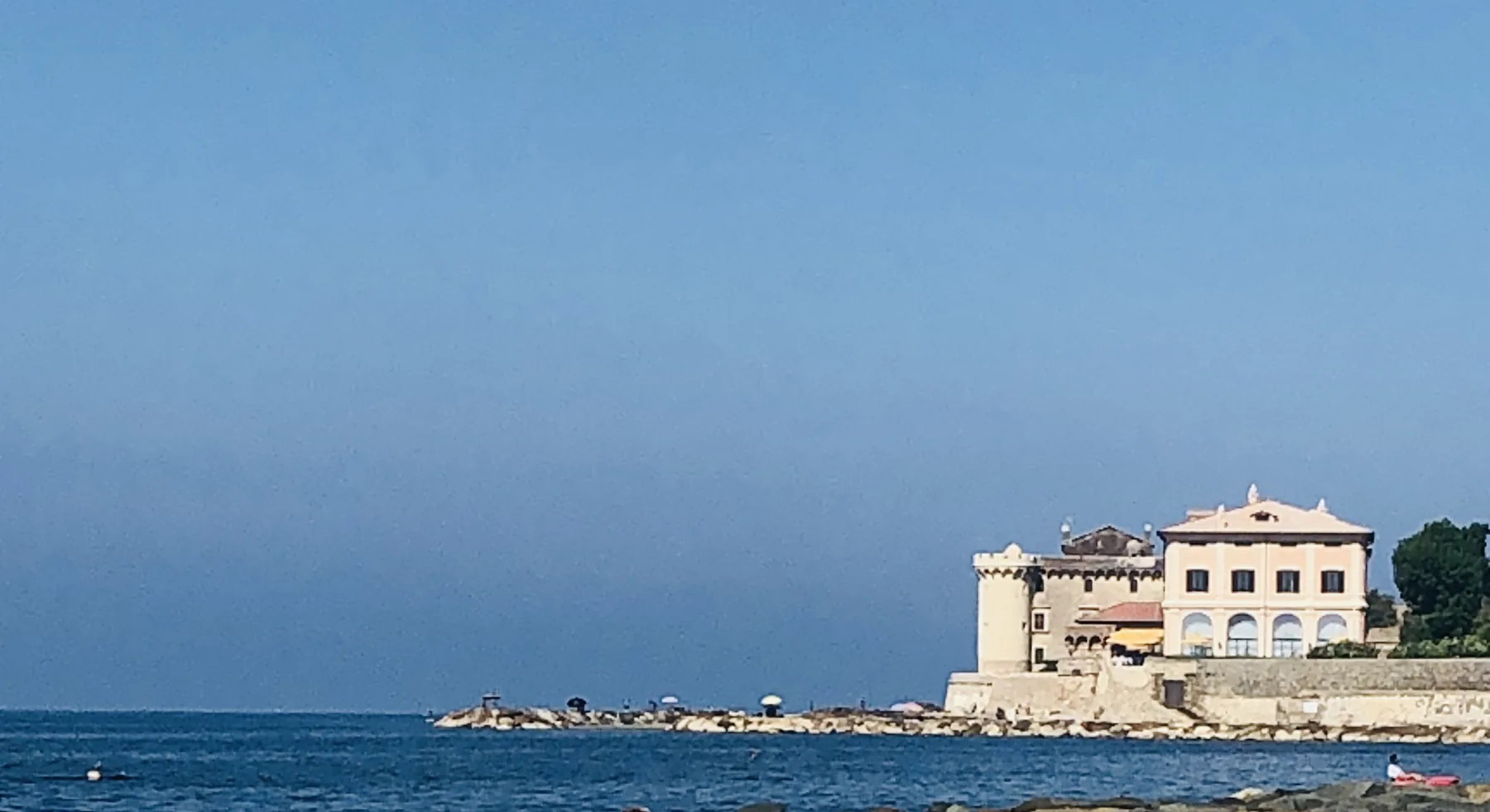
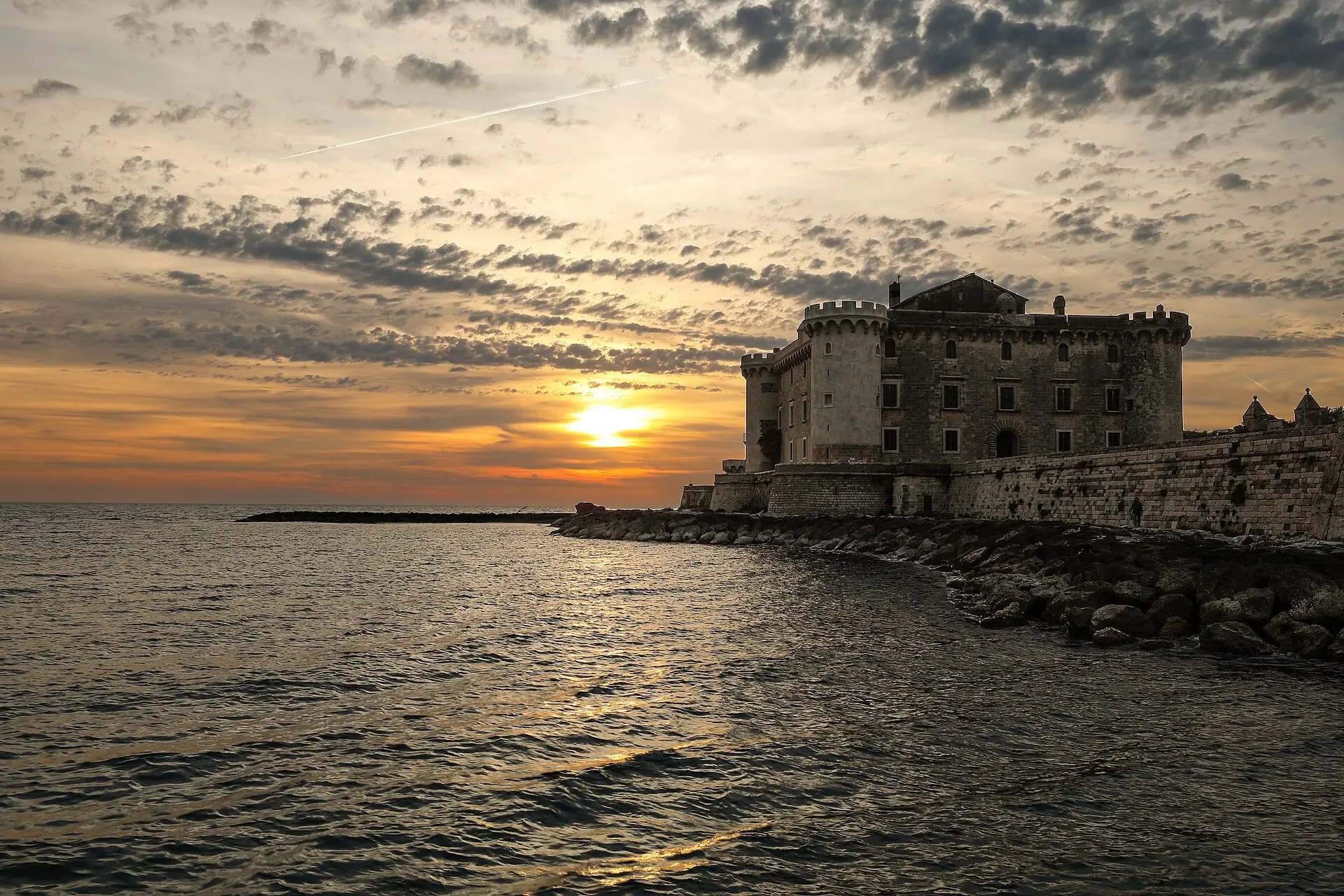
The contemporary view helps orient the location of Palo but does not recreate the appearance of the castle and coastline in the early 17th century.
Paoladepalma1979 / Wikimedia Commons · CC BY-SA 4.0 · resizing and WebP conversion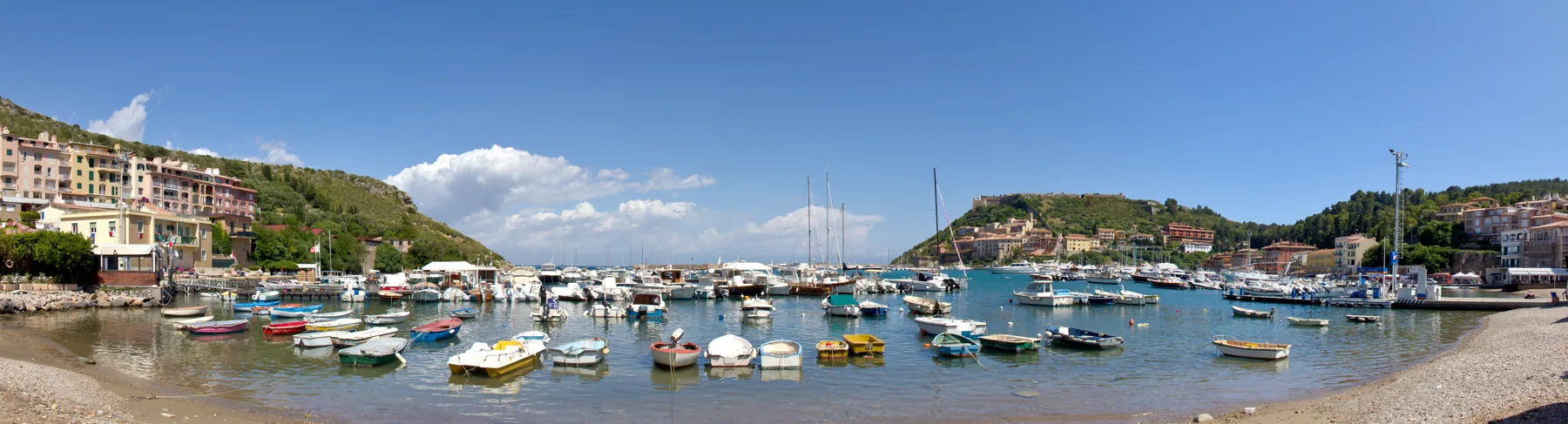
Sources contemporary to the events place the illness and death here. Modern photography documents the current site, not the route taken or the circumstances of 1610.
© Raimond Spekking / CC BY-SA 4.0, via Wikimedia Commons · cropped, resized, and converted to WebPHISTORY, DEBATE, MEMORY
The final journey and the seafront monument are part of the same local narrative, yet they do not hold the same documentary value.
Gentile’s letter links the landing point and the stopping place to Palo; The exact details and location are unknown.
Historical event · no specific archaeological site locatedNotices, correspondence, and asset searches point to the Presìdi area, without resolving the question of the cause of death.
Historic site distinct from LadispoliThe contemporary monument makes the memory of the event—and the debate surrounding it—public.
Outdoor walk · free accessESSENTIAL STEPS
Confirmed dates, archaeological phases, and traditions are presented for what they truly represent.
A power of attorney document involving the Tomassoni family records negotiations that included Caravaggio; it does not prove that a papal pardon had already been granted.
documento certo · esito non ancora definitoThe painter boards a felucca with a few belongings and some paintings. The exact date and planned itinerary are unknown.
quadro documentario convergenteAccording to Gentile, Caravaggio was stopped at Palo while the boat carrying his belongings continued on; a recent re-examination places the detention at Porto Ercole.
fonte coeva · interpretazione discussaThe traditional date and location are widely accepted by historians; the cause of death has not been established.
data convenzionale solida · causa apertaRoman news bulletins report and specify the death occurring during the return journey to Rome.
documenti coeviThe Nuncio reconstructs the events at Palo—the separation from the paintings, the journey to Porto Ercole, and the death—providing the central narrative source for the case.
lettera coevaThe Viceroy of Naples requests information regarding the inventoried items and a *Saint John*, confirming the trail leading to the Porto Ercole heritage collection.
corrispondenza ufficialeA bronze sculpture by Sergio Bonafaccia has been unveiled at Marina di Palo, serving as a public memorial to the journey and the questions that remain unanswered.
evento civico documentatoWHAT TO OBSERVE
The vessel departs with the goods; from that moment on, the painter and the paintings follow separate documented paths.
It is the most detailed source close to the events, but it does not replace the official detention report nor does it clarify every step of the process.
The canvases associated with the "last journey" have become the subject of inquiries, transfers, and identifications that remain a topic of ongoing research.
Peace and forgiveness were at the heart of the journey, though it cannot be said that grace was already formally within the painter's grasp.
Fever, infection, wounds, lead poisoning, and murder represent hypotheses of varying weight; none justifies a definitive public verdict.
The bust transforms a controversial historical episode into a contemporary urban landmark—one to be interpreted as such.
BEFORE GOING
The bust of Sergio Bonafaccia stands on the Passeggiata del Caravaggio, along the Marina di Palo seafront. It is an open-air work that can be viewed without a ticket or set visiting hours.
The map leads to the contemporary monument, not the exact spot where the painter is said to have landed or been stopped. Before setting out, check your GPS route and any changes to traffic regulations along the seafront. Do not attempt to access the Castello or Posta Vecchia properties.The contemporary artwork serves as the public focal point for the city's commemoration of Caravaggio.
There is no single archaeological site or plaque capable of proving, on its own, the events of 1610.
Respect the pedestrian path, storm surges, temporary construction sites, and nearby private properties.
CONSULTABLE SOURCES
This first edition organizes the most solid information. Individual pages may be expanded with documents, surveys, and archival photographs.
Re-examines the letter by Deodato Gentile—published in Stefania Macioce (2023, doc. 891, pp. 285–287)—and proposes a new interpretation of the location where the stop occurred.
Open the source CRITICAL SUMMARYCritical discussion of Curti’s study, useful for presenting the recent proposal as an interpretation rather than an established fact.
Open the source MUSEUM RECORDThe official record outlines the painting, the belongings from the final journey, the separation at Palo, and the death at Porto Ercole, noting that the circumstances remain unclear.
Open the source DocumentsDocumentary contribution regarding peace negotiations and the context of the final return to Rome.
Open the source HISTORIOGRAPHICAL STUDYAnalysis of the various narratives regarding death and their critical construction.
Open the source RECENT DEBATENew edition and documentary re-examination intended as a contribution to the debate, not a definitive conclusion to the case.
Open the source MONUMENTAccount of the inauguration, the artist Sergio Bonafaccia, and the civic significance of the artwork on the seafront.
Open the source MEDICAL HYPOTHESISThe study proposes sepsis as the cause of death; the attribution of the remains and the diagnosis remain subjects of debate.
Open the source CRITICAL REPLICAThe replica demonstrates why the attribution of the remains and the diagnosis cannot be considered definitive.
Open the source DISCOVER THE SECTOROpen the complete catalog of monuments, archaeological sites, and historical landscapes.
Open the sectorCONTINUE THE ROUTE